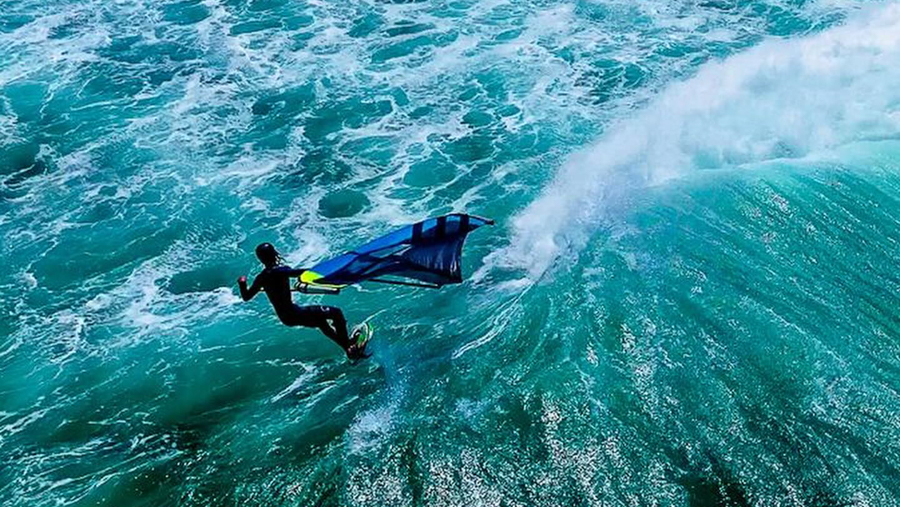
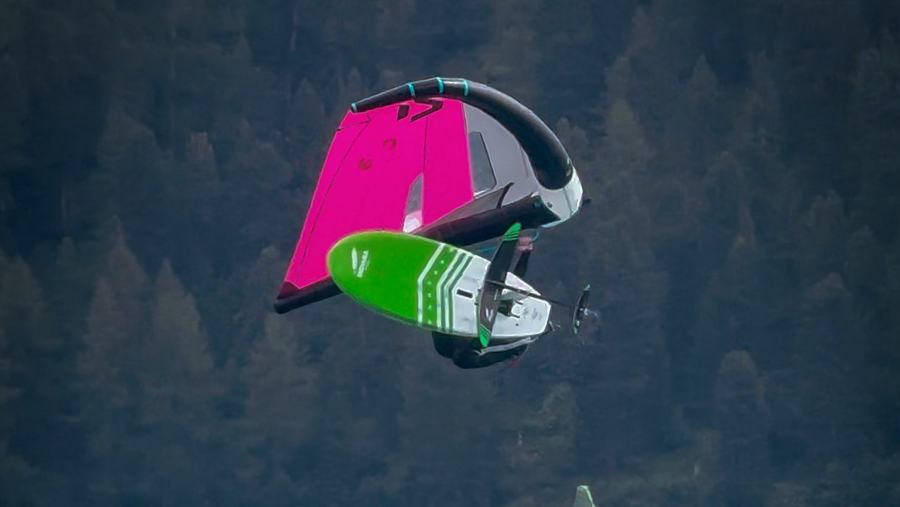
At just 17 years old, Keanu Lenzin already rides with the calm confidence of someone who knows exactly what he’s looking for on the water. Based near Lake Constance, the Indiana Paddle Surf & Co. Adrenaline Ambassador spends his sessions switching between lake bumps, waves, wingfoil and more recently, parawing.
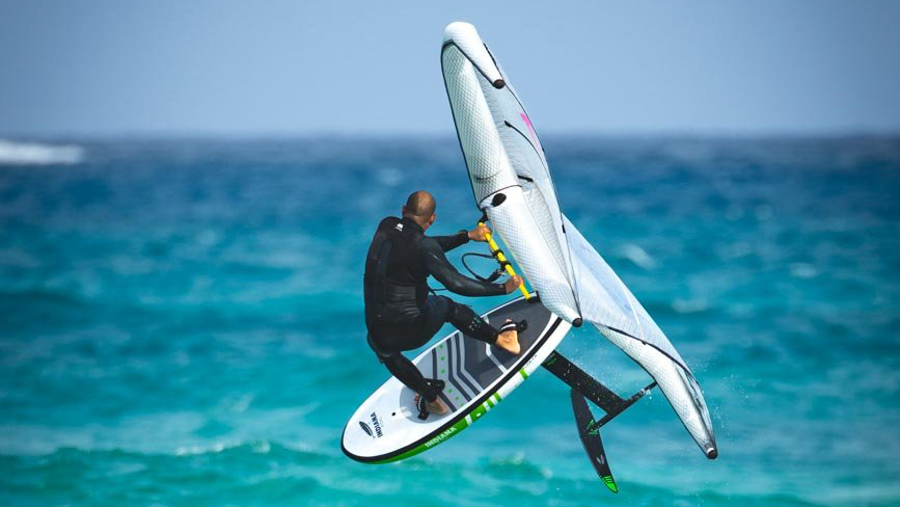
For those light-wind days and glide-focused sessions, Keanu has been relying on the Indiana Flow Freewave 65 L, a board designed to blur the line between freestyle and wave riding. Quick to take off, surprisingly agile for its volume, and forgiving on landings, the Flow Freewave has become a key part of his quiver, especially when paired with the Barracuda foil for long, smooth glides.
From carving small waves on the lake to using the board as his go-to parawing platform, Keanu shares how the Flow Freewave fits his riding style, why volume can be an advantage, and how this versatile shape helps him push further, while still keeping things fun.
Keanu, you’ve been riding the new Indiana Flow FreeWave for a while now, what size do you have and what were your first impressions when you got on it?
Yes, I’m currently riding the one with 65 liters and I’m using it for low wind sections on the lake or when I‘m parawinging. The first thing I was impressed by was how quickly I got on the foil with it. My smallest wing is a 5.0 and I barely have any issues getting up on the foil with the FreeWave. Normally I love smaller boards, but for me the FreeWave is the perfect alternative for me if I want a bit of a bigger board.
The Flow FW has a new outline and volume distribution this year. How does that translate in real conditions, especially in carving or freestyle sessions?
When carving in small waves, you don’t really realize that the board under your feet is 65 liters. I’m used to my 36 liters board and the difference when carving is really not that big. Of course it’s a bit less reactive, but for its size, it’s really nice to ride. For freestyle, it’s pretty good too. When landing a trick, you get that extra bit of volume to make sure you keep standing.
You ride in a mix of lake and ocean conditions, how does the board adapt between flatwater, wind chop and waves?
I mostly ride it on the lake where we have about 0.5 to 1 meter waves and I never have any issues such as that the board wasn‘t stable or that it changed direction. On the ocean, it’s a bit more difficult for sure, but I think that‘s an issue with every bigger board; to get through the whitewash. For me it’s an allrounder that you can ride in any conditions and at any spot.
Indiana designed the Flow FW to bridge freestyle and wave riding. What kind of rider do you think this board is made for?
I think it’s the perfect board for people who are changing from a bigger board to a smaller one. It really feels like you have more than 65 liters under your feet when standing on it. So I think it’s actually a pretty good board for everyone. I mean both me and my dad ride and love it, although we have different ways of riding and also different skills. I’d say if you have never ridden in waves bevore, it’s the perfect board for the first turns in the waves because it carves so nicely and after touchdowns, it pops right back up.
From a rider’s perspective, what detail or feature impressed you the most: the deck shape, the rails, or the general feel underfoot?
I think it’s the sharp cut tail. When riding in waves, it gives you so much speed when a wave pushes you from behind. I also absolutely love it for parawinging cause there I really need that extra bit of volume. What I find awesome as well is the concave on top of the board through which you have much more feeling of the board and also control. Even without footstraps you have a really good feeling of the foil.
How do you integrate the Flow FW into your quiver? Is it your everyday board, or the one you take out when you really want to push your limits?
I mostly use it for parawinging, because, as I said, I think it’s perfect for that. When there is lots of wind, I’d rather use my smaller, old FreeWave board. But I always take it with me in case I want to go parawinging or if there’s a bit less wind.
Which foils do you use with your Flow FW and in what conditions?
For parawinging, I mostly use the Baracuda L because it’s a bit bigger and has a great glide to ride down small waves. I think that’s the perfect combo, but it also works great with smaller foils like the Marlin S, which is my everyday foil. I normally use the Drive mast, which just works all the time.
Looking back at your season, what were your highlights of 2025 ; and what are your goals or projects for next year, both on and off the water?
Definitely a highlight was my time in South Africa this fall, because I just always love being there. Unfortunately I wasn‘t able to take place in the Wingfoil Racing World Cup, but I’m definitely hyped to do so again next year. I’m also going to South Africa again this winter, which I’m really looking forward to. There I have the opportunity to shape a board with a local shaper, which makes all his boards out of wood and local materials. I‘m really grateful to be able to make this experience and happy to make my first experiences, shaping boards.
For 2026, Indiana Paddle & Surf refines its foil range with the precision and consistency that define the brand. No radical shift, just smart evolutions, with new shapes, refined constructions and a stronger, more coherent lineup across all foil disciplines. Discover their 2026 LookBook! Boards 🆕 Easy Series — New for 2026 As the big […]
For Swiss rider Mirko Schadegg, wingfoiling is the natural continuation of a lifelong passion for water sports. From windsurfing and wave surfing to wakeboarding and now wingfoiling, he’s always chasing new sensations on the water. We caught up with him to hear about his experience with the Indiana Flow FW 75L, a board he’s been […]
Triple French freestyle kite champion Paul Serin is known for his committed riding style and his strong passion for all forms of glide. A complete rider, passionate about surfing, foiling and always curious for new sensations, he naturally fell for wingfoiling as soon as it appeared. Today, he tests and develops gear across several disciplines, […]
Indiana Paddle & Surf Co has completely reimagined its iconic FreeWave board for 2025, and the result is the Flow FW: a wingfoil board that blends freestyle pop, wave-surfing agility, and all-conditions confidence. Designed by Gunnar Biniasch, this is a board built for riders who want to feel fast, connected, and in control, no matter […]
Triple champion de France de kite freestyle, Paul Serin est connu pour son style engagé et son goût prononcé pour la glisse sous toutes ses formes. Rider complet, passionné de surf, de foil et toujours curieux de nouvelles sensations, il s’est naturellement laissé séduire par le wingfoil dès ses débuts. Aujourd’hui, il teste et développe […]
Steeve Fleury, aka “LeDoigt”, is a true waterman: multiple Swiss stand-up paddle champion, passionate artist, and above all, a foil aficionado in all its forms. Pump foil, SUP foil, wingfoil, surf foil… he switches from one discipline to another with impressive ease. For the 2025 season, he continued developing his Signature “LeDoigt” boards with the […]
From now until April 27, Indiana Paddle & Surf Co. is (re)launching its Big Wave Sale, and that means one thing: high-performance gear at outlet prices. Whether you’re just getting into wing foiling or ready to upgrade to premium equipment, now’s your chance to grab top-quality gear from the 2024 lineup — including boards, foils, […]
Steeve Fleury, alias “LeDoigt”, est un véritable waterman : multiple champion de Suisse de stand-up paddle, artiste passionné et surtout aficionado du foil sous toutes ses formes. Pump foil, SUP foil, wingfoil, surf foil… il passe d’une discipline à l’autre avec une aisance impressionnante. Pour la saison 2025, il a continué son développement de boards […]
Indiana Paddle & Surf Co. introduces its 2025 wingfoil board lineup, developed by shapers Gunnar Biniasch, Andi Widmann and Steeve Fleury. This collection features innovative designs catering to various wingfoiling disciplines, ensuring optimal performance for riders of all levels. Here’s a short presentation of the programme and the shape of each of these boards, accompanied […]